Customer experience has become one of the most talked about priorities for brands. From personalisation to speed, convenience and tone of voice, businesses invest heavily in shaping how customers feel when they interact with them.
Yet one of the most influential moments in that experience is still often treated as a back-office process: the moment of payment.
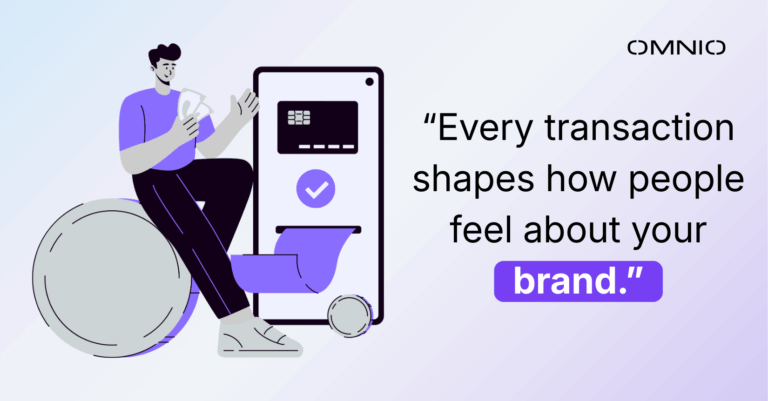
Payments are not neutral. They are emotional. They are the point at which trust is tested, value is exchanged and expectations are either met or broken. Whether a customer feels confident, reassured and appreciated, or frustrated and disconnected, is often decided in just a few seconds at checkout.
Payments are part of the experience, not the end of it
Customers do not separate payment from the brand experience. To them, it is all one journey.
A smooth, fast and intuitive payment reinforces confidence. A confusing, slow or fragmented one can undo the goodwill built throughout the rest of the interaction. This is true whether the customer is buying a coffee, booking a holiday or renewing a subscription.
As expectations rise, driven by digital-first brands and everyday app experiences, tolerance for friction continues to fall. Customers increasingly expect payments to feel effortless, relevant and, in many cases, rewarding.
From transactions to relationships
For many brands, payments are still viewed primarily as a cost or operational necessity. The focus is on processing the transaction and moving on.
But every transaction carries far more than money. It contains data, context and intent. When payments are disconnected from loyalty and value, that insight is lost and the opportunity ends at checkout.
When payments are connected, something different happens. Brands can recognise customers in the moment, respond in real time and reinforce the relationship instantly. A purchase becomes a moment of engagement, not just completion.
What customers notice, even if they don’t articulate it
Customers may not describe their experience in technical terms, but they notice how it makes them feel.
They notice when rewards are delayed or unclear.
They notice when offers feel generic rather than relevant.
They notice when value is hard to use or locked behind unnecessary steps.
Conversely, they notice when things just work. When rewards appear instantly. When value is easy to understand and use. When the experience feels considered rather than transactional.
These moments shape memory and influence whether customers return.
Why this matters now
Several forces are coming together to make the payment experience more important than ever.
- Digital habits have raised expectations. Customers are used to immediacy and simplicity.
- Data and AI are enabling more intelligent, context-aware experiences.
- Cost pressures are forcing brands to look for better ways to retain value and build loyalty.
In this environment, treating payments as separate from experience is increasingly a disadvantage.
A better starting point for the year ahead
Improving customer experience does not always require radical change. Often, it starts by asking a simpler question: what does the customer feel at the moment they pay?
Brands that begin their experience strategy at this point are better positioned to build trust, loyalty and long-term value.
As 2026 unfolds, customer experience will continue to be a differentiator. Payments will play a bigger role in that story than many brands expect.
👉Start the conversation about rethinking your payment journey.